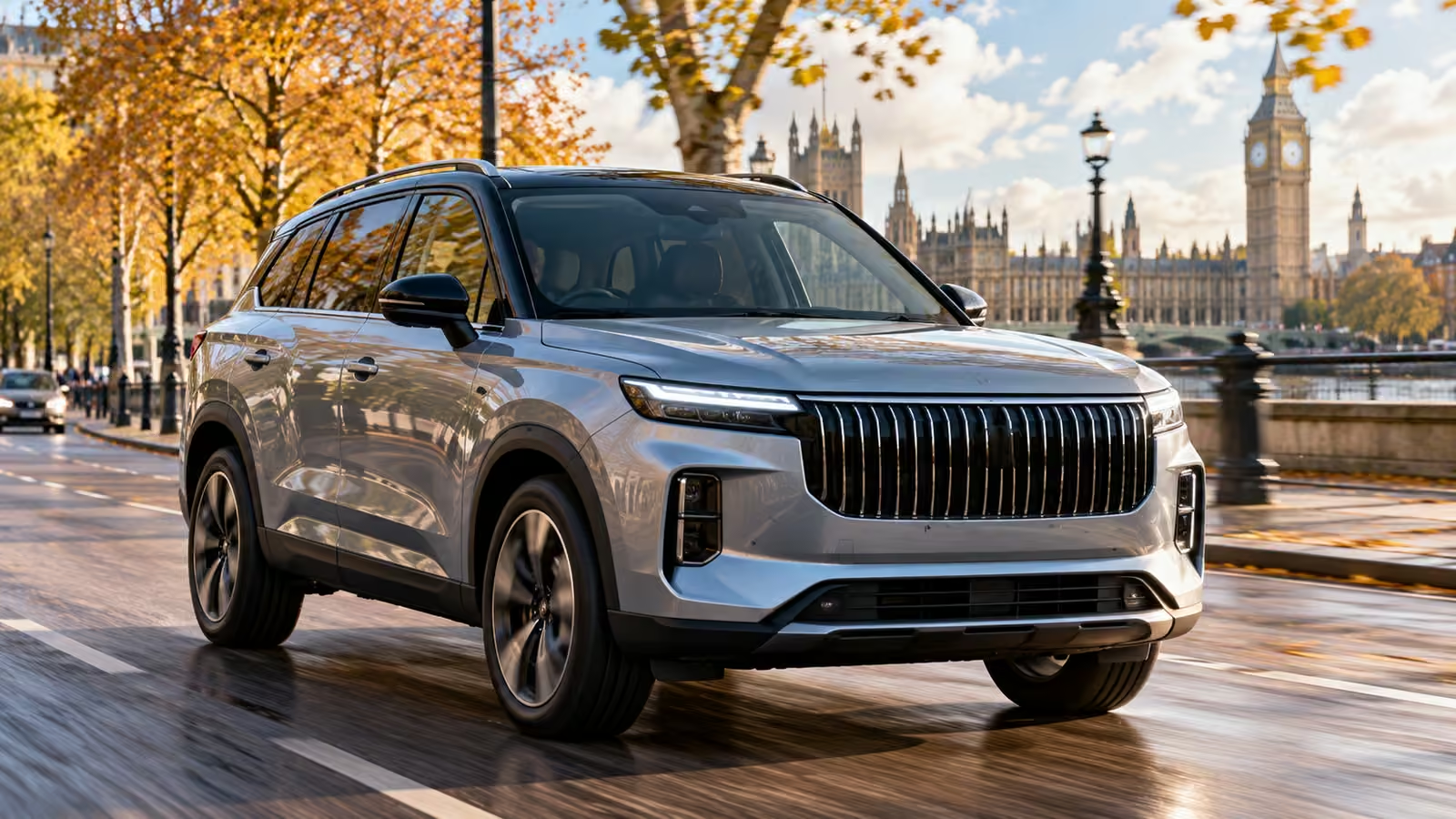
The Jaecoo 7 has taken the top spot in the UK’s September 2026 new-car registration table, with 10,813 registrations according to the Society of Motor Manufacturers and Traders. Tesla’s Model 3 followed on 9,929, while the Ford Puma — still the year-to-date leader — recorded 6,958. The result is one of the clearest signs yet that the UK market is being reshaped by new entrants, intense pricing and a rapidly growing electrified-car segment.
The headline is striking, but it needs context. Monthly registration rankings are not the same thing as annual sales leadership, and registration data is not a direct measure of private retail demand alone. September is also one of the UK’s most important months because of the number-plate change, so volumes are unusually high. Even so, Jaecoo’s position matters because it shows how quickly a relatively new name can move from niche entrant to mass-market contender.
What do the September figures actually show?
SMMT’s September table lists 350,518 new-car registrations, up 12.1% from 312,793 a year earlier. It was the strongest September since 2017 and the tenth consecutive month of market growth. The Jaecoo 7 led the model chart on 10,813 units, ahead of the Tesla Model 3 on 9,929 and Ford Puma on 6,958.
That does not make Jaecoo the annual leader. Ford Puma remains first year to date with 42,926 registrations, while Jaecoo 7 sits second on 39,473. Kia Sportage is third on 37,085. The useful way to read the table is therefore that Jaecoo has built enough momentum to challenge established high-volume models, rather than that one strong month has already settled the year.
Why is Jaecoo 7 suddenly so visible in Britain?
The simplest explanation is that it sits in the part of the market British buyers continue to favour: a medium-size SUV shape, a relatively generous equipment list and pricing that undercuts many premium-looking rivals. The brand has also entered Britain at a time when consumers are increasingly willing to consider manufacturers they did not know a few years ago.
That shift matters. The UK new-car market is no longer dominated only by a familiar group of European, Japanese and Korean brands. Chinese manufacturers have expanded quickly through electric vehicles, plug-in hybrids and aggressively specified petrol models. The competitive pressure is now visible not just in advertising or dealer expansion, but in monthly registration tables.
Is the Jaecoo 7 really outselling the Ford Puma?
In September, yes. Across 2026 so far, no. The distinction is important because monthly rankings are highly sensitive to delivery cycles, fleet orders, dealer registrations and seasonal plate changes. Puma’s year-to-date total is still higher, and the final annual ranking will depend on the last quarter.
For a buyer, the ranking should not be treated as a verdict on which car is “better”. It is evidence of market momentum, availability and demand. Reliability, ownership costs, fuel use, insurance, depreciation, warranty terms and dealer support are much more relevant to an individual purchase decision.
What happened to electric-car registrations?
Battery-electric registrations reached 99,199 in September, up 36.3% year on year. BEVs accounted for 28.3% of the month’s market. Plug-in hybrids grew even faster, rising 55.7% to 59,563 units and taking a 17.0% share.
Those numbers are significant because electrified vehicles together made up a very large share of September registrations. Yet the transition is not complete. Petrol remained the single biggest fuel category with 131,861 registrations and a 37.6% share. Diesel was much smaller at 14,057, though it was actually up 11.5% year on year.
Why did Tesla Model 3 perform so strongly?
The Model 3 was not only the second-best-selling car overall in September, it was also the leading battery-electric model. That combination shows Tesla still has substantial volume in Britain even as the EV market becomes more crowded.
The Model Y ranked fifth overall with 5,946 registrations. Behind Tesla, the September BEV table included models such as BYD Sealion 7, BYD Seal, Kia EV3, Skoda Enyaq, Volvo EX30 and Mercedes CLA. The important trend is not one brand winning every month, but the widening number of electric models capable of meaningful volume.
What does 350,518 registrations tell us about the UK market?
September’s total was 12.1% higher than a year earlier. SMMT attributes the stronger market to greater model choice, manufacturer incentives and, in part, high fuel prices encouraging interest in electric cars. Private registrations also rose, which is important because recent UK growth has often been heavily dependent on fleet demand.
Private registrations reached 149,158, up 13.9%. Fleet registrations rose 9.6% to 190,988. Fleets still represented the largest buyer category at 54.5% of the market, while private buyers accounted for 42.6%. That mix is worth remembering when interpreting “best seller” lists, because not every registration represents the same type of customer.
Does the result mean Chinese brands will dominate the UK?
That conclusion would be premature. One model having an exceptional month is not the same as one country’s manufacturers taking permanent control of the market. Established brands retain large dealer networks, strong used-car ecosystems and substantial annual volumes.
What has changed is the level of competition. A new entrant can now move into the top ten quickly if it combines price, supply and the right product format. That forces incumbents to respond through discounts, equipment, finance packages and faster model renewal.
What should a buyer check before choosing a Jaecoo 7?
Start with the version being offered. Powertrain, trim, wheel size and finance structure can change the value calculation considerably. Compare the cash price with the total amount payable under finance, not only the monthly headline. Then examine insurance quotes before signing, because premiums can vary sharply between new or less-established models.
Warranty terms and dealer coverage also matter. A long warranty can be attractive, but buyers should understand what is covered, which maintenance conditions apply and how convenient the nearest authorised service point is. Finally, consider resale value. A rapidly growing brand can gain recognition quickly, but the used market may take longer to establish predictable residual values.
What should Ford Puma and other rivals worry about?
The main threat is not that every Jaecoo buyer would otherwise have chosen a Puma. It is that the competitive set is widening. Buyers who once compared three or four familiar SUVs can now have a much longer shortlist, including new Chinese brands, electric alternatives and heavily discounted plug-in hybrids.
That changes pricing power. If one entrant adds more equipment at a lower monthly cost, established manufacturers may have to increase incentives or specification. The result can benefit consumers, although it can also make resale values and finance offers harder to compare.
September’s key numbers
- Total new-car registrations: 350,518, up 12.1% year on year.
- Jaecoo 7: 10,813 registrations, first overall for September.
- Tesla Model 3: 9,929, second overall and first among BEVs.
- Ford Puma: 6,958 in September and 42,926 year to date.
- Battery-electric cars: 99,199, a 28.3% market share.
- Plug-in hybrids: 59,563, a 17.0% share.
- Petrol: 131,861, still the largest single fuel category.
What happens next?
The final quarter will show whether Jaecoo can maintain its pace and whether Ford Puma holds on to the annual lead. It will also show how much of September’s EV surge carries into more ordinary months. Plate-change months can amplify demand, so October and November are useful tests of whether momentum is structural or seasonal.
For consumers, the most useful takeaway is not simply that a new SUV has topped one chart. It is that the UK car market is becoming more competitive, more electrified and less predictable. That can create better deals, but it also makes careful comparison more important.
Sources
The SMMT registration table provides the September model, fuel and buyer-type figures. SMMT’s September market release explains the 12.1% market growth and record battery-electric volume.
More UK ownership and car-market guides are available in Mobility.