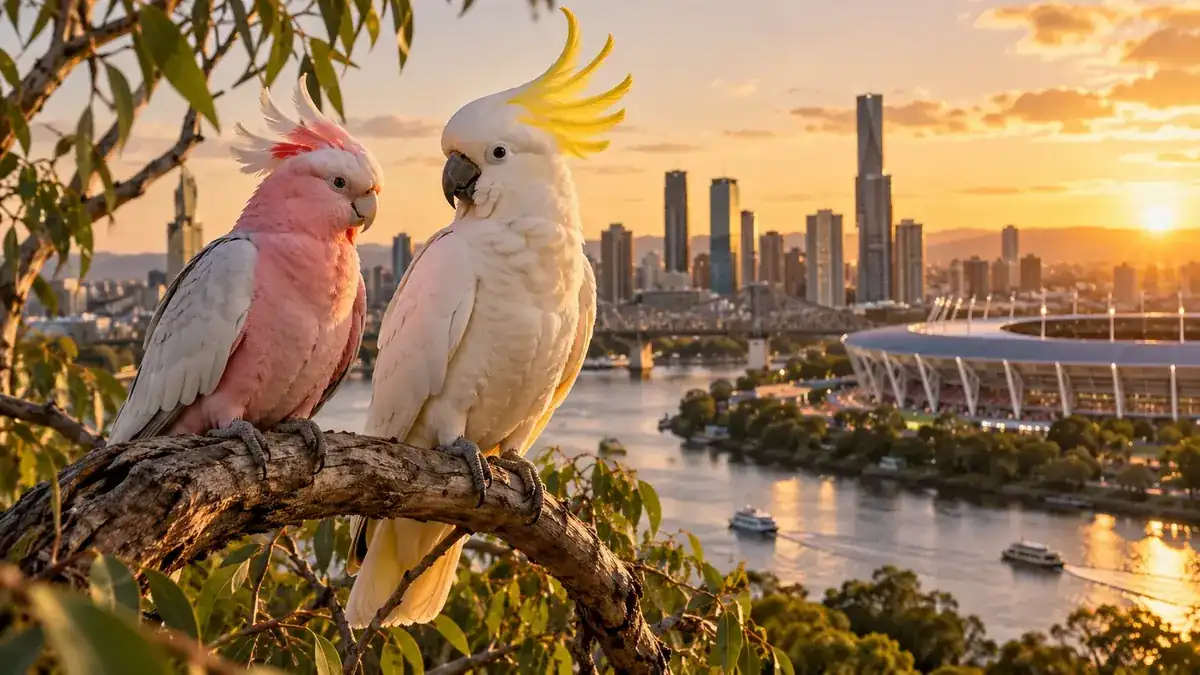
Brisbane 2032 has officially unveiled the emblems that will represent the Olympic and Paralympic Games, placing two unmistakably Australian birds at the centre of the identity. The Olympic version uses a pink cockatoo, while the Paralympic version features a sulphur-crested cockatoo.
The birds are only the first layer. The crests also reference Queensland, the Olympic and Paralympic flames and the year 2032. The organisers designed the identity so it can work as a simple silhouette at small sizes while revealing more symbolism when viewed closely.
What do the Brisbane 2032 emblems show?
The Olympic emblem is built around a pink cockatoo. The Paralympic emblem uses a sulphur-crested cockatoo. Both are familiar Australian birds known for being loud, social, inquisitive and difficult to ignore — qualities organisers describe as fitting the personality they want the Games to project.
The shape of Queensland is integrated into the bird’s crest, linking the identity to the host state rather than only to central Brisbane. The crest also echoes a flame, one of the most recognisable symbols of the Olympic and Paralympic movements.
Why a cockatoo instead of a kangaroo or koala?
Australia has several animals with stronger international recognition, including the kangaroo and koala. The cockatoo gives Brisbane 2032 something less predictable while remaining immediately Australian.
It also works visually because the bird’s raised crest can be transformed into a flame-like shape. That lets one graphic carry several ideas at once without adding separate icons.
What is different between the Olympic and Paralympic versions?
The two emblems are related rather than identical. The Olympic identity uses the pink cockatoo, while the Paralympic version uses the sulphur-crested cockatoo. That gives each Games its own character while keeping the host identity consistent.
This approach is useful in practice. Organisers need designs that can appear on venues, tickets, uniforms, broadcast graphics, merchandise and digital interfaces for years. A shared visual language reduces fragmentation while preserving a clear distinction between the two events.
How was the emblem revealed?
Brisbane 2032 used a six-part reveal across Queensland. Different pieces were presented in different locations before being assembled into the complete design. The approach was intended to show that the Games belong to the wider state, not just a single city precinct.
The final reveal did not go exactly to plan. An official YouTube upload exposed the full design early, turning the launch into a story before the scheduled event. Organisers then moved quickly to acknowledge the leak rather than pretend it had not happened.
Did the leak damage the launch?
So far, it appears to have done the opposite. The accidental reveal generated widespread attention before the formal launch. Organisers and officials have emphasized the positive public reaction rather than focusing on the mistake itself.
For a brand that has to remain relevant until 2032, early recognition matters. The bigger question is whether people still like the symbol after seeing it repeatedly for six years — not whether the first reveal followed the original media plan.
Where is Queensland hidden in the design?
The organisers say the outline of Queensland is embedded in the cockatoo’s crest. That is a deliberate geographic signal: Brisbane is the host city, but competition and Games-related activity will extend across the state.
It also gives the identity local specificity. A generic Australian animal could represent any national campaign; a shape tied to Queensland makes the emblem more clearly connected to the 2032 host.
What does the flame mean?
The crest’s flame-like shape connects the bird to the visual tradition of the Games. Flames represent continuity, ambition and the ceremonial journey toward the opening ceremony.
The successful part of the concept is that the flame is not placed beside the bird as a separate symbol. It is built into the bird itself, which keeps the mark compact enough for modern digital use.
Is this also the mascot?
No. An emblem and a mascot serve different roles. The emblem is the official visual identity used on signage, communications and commercial material. The mascot is a character designed primarily for public engagement, events, merchandise and younger audiences.
Brisbane 2032 has not made the final mascot announcement. The cockatoo emblems may influence public expectations, but the mascot process remains separate.
Why does a Games logo matter six years out?
Major sporting events build recognition over a long period. The emblem appears in sponsorships, venue planning, procurement, tourism marketing and public information well before the opening ceremony.
For Queensland businesses, that also marks the beginning of a more visible commercial phase. Local manufacturers, designers, tourism operators and suppliers will increasingly look for opportunities connected to 2032.
What should a strong host-city identity achieve?
It needs to work in three different environments at once: as a tiny icon on a phone screen, as a large mark on a stadium and as a cultural symbol that people remember after the event. Complexity is the enemy if the design only works in one of those situations.
The cockatoo idea is deliberately simple at first glance but layered underneath. Whether it becomes iconic will depend on repeated use, the quality of the broader visual system and the memories eventually attached to the Games themselves.
What comes next for Brisbane 2032?
The emblem is one milestone in a much larger preparation program. Venue delivery, transport, the final sports program, accessibility, accommodation, security and the visitor experience will matter far more to the success of the Games.
Branding nevertheless matters because it gives all of that work a public face. From now on, the cockatoos will increasingly appear whenever Brisbane 2032 communicates with athletes, fans, sponsors and international audiences.
The symbolism at a glance
- Pink cockatoo: Olympic emblem.
- Sulphur-crested cockatoo: Paralympic emblem.
- Crest shape: references the Games flame.
- Queensland outline: ties the identity to the host state.
- Six-part rollout: represented different parts of Queensland before the full reveal.
Sources
The International Paralympic Committee published an official explanation on 5 October: “Brisbane 2032 Olympic and Paralympic Games Emblems celebrated”. Associated Press also reported on the official launch and the earlier accidental leak.
ABC News documented the early YouTube reveal and the planned Monday launch, providing useful chronology for how the emblem became public.
More Australian sport, culture and major-event coverage is available in Magazine.