Why Dublin is the focus on 14 October
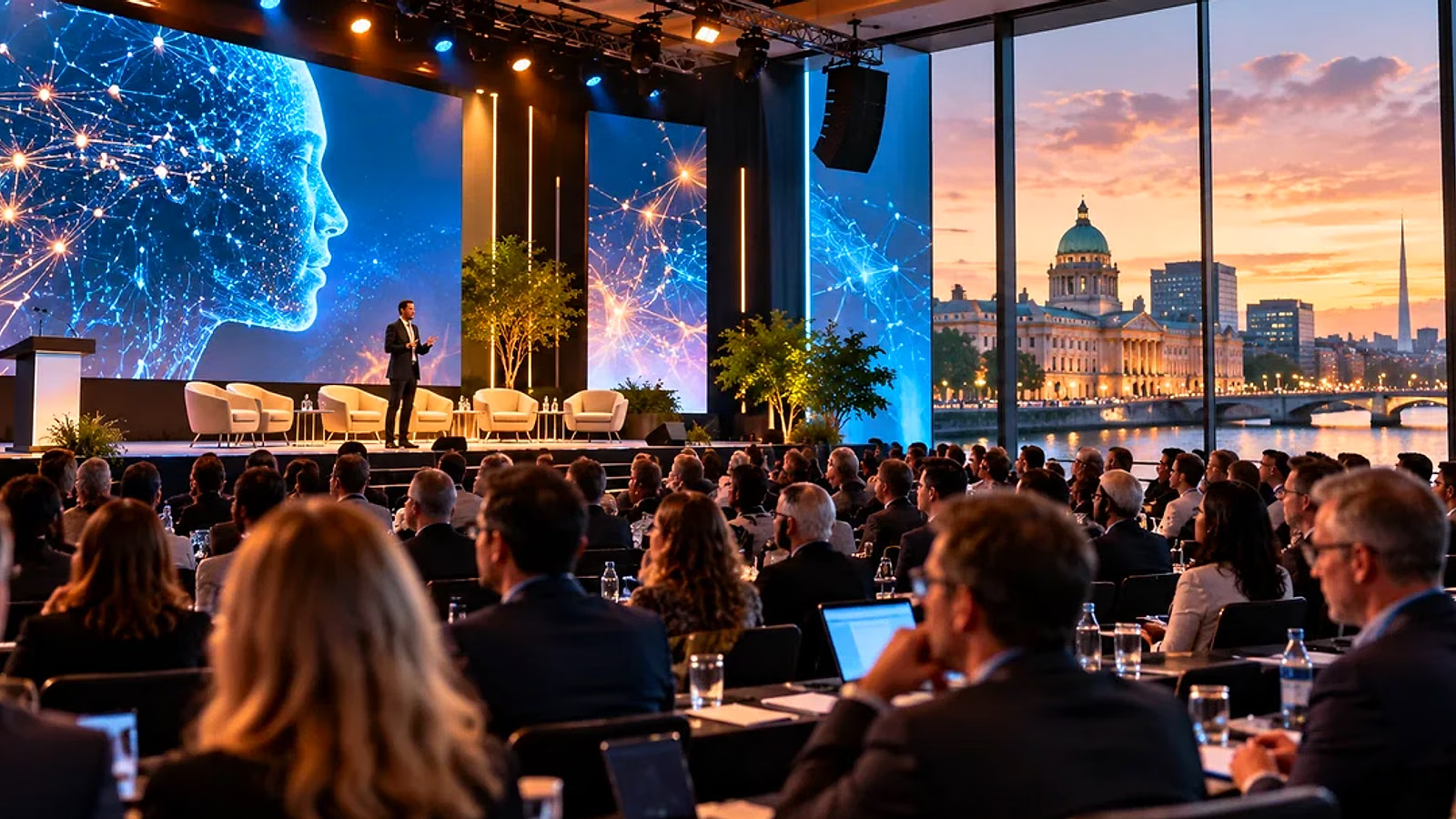
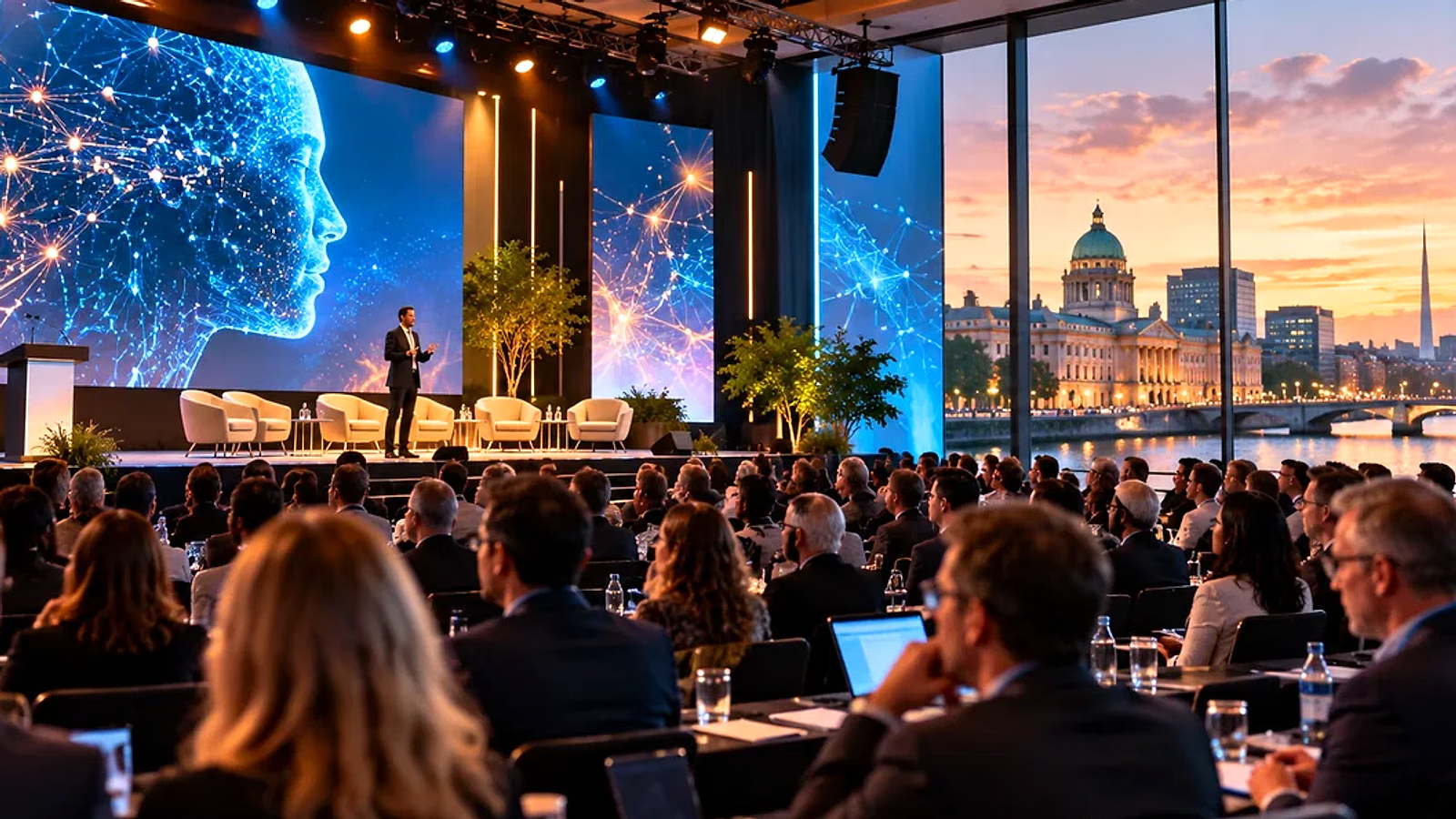
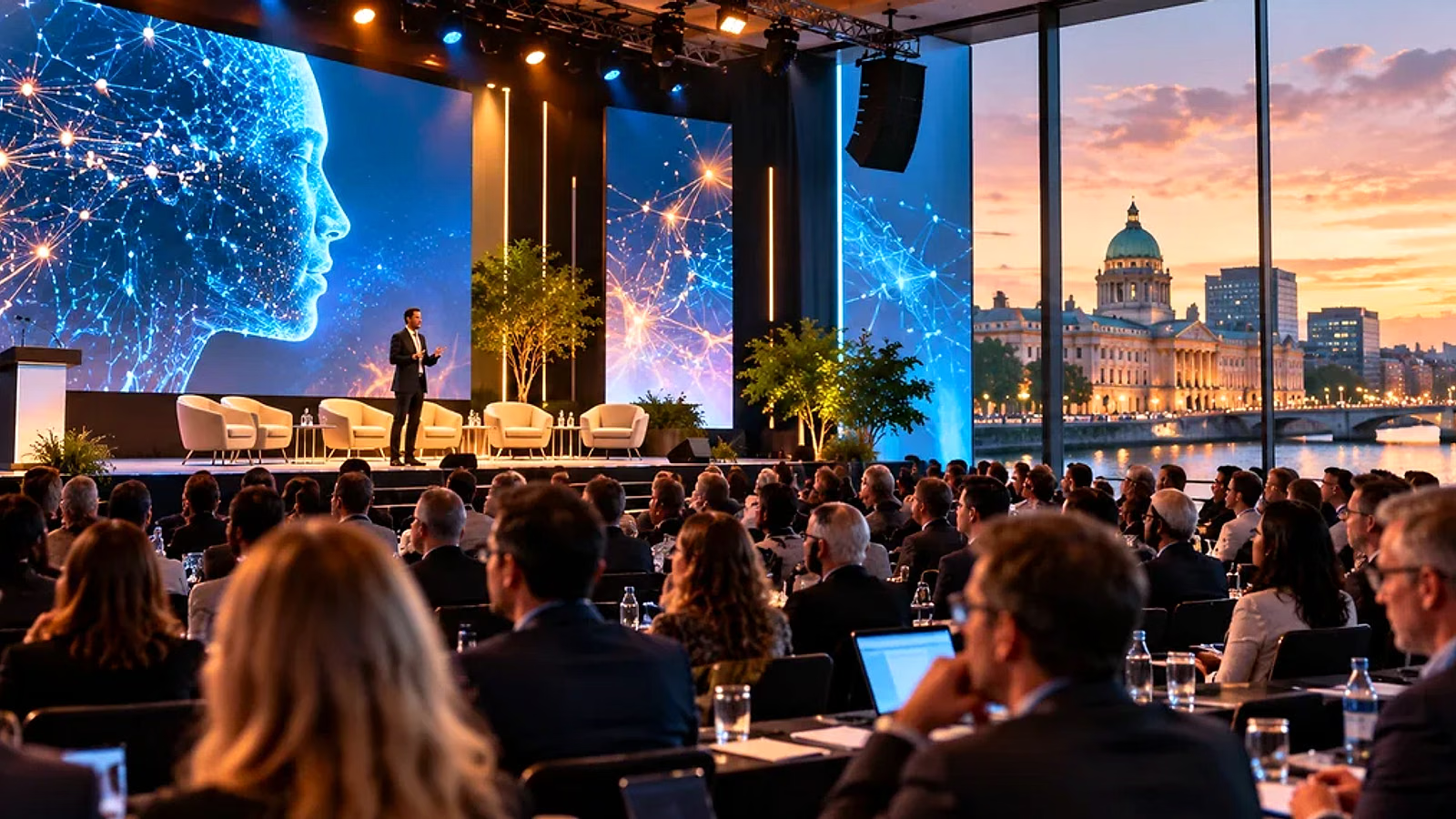
Ireland is hosting the International AI Summit at the Royal Dublin Society on 14 October 2026 as part of its presidency of the Council of the European Union. The gathering is the official opening event of European AI Innovation Month, a programme involving policymakers, researchers, enterprises and public services. The agenda focuses on how artificial intelligence can create value in real sectors while supporting security and public trust. An event taking place today does not by itself mean that Ireland has passed a new AI law or that a new grant is instantly open for every company. The relevant distinction is between discussion, policy plans and completed decisions.
The event and the European programme are different
The Dublin summit takes place on one day, while European AI Innovation Month runs from 14 October to 17 November 2026. According to the European Commission, the calendar includes the AI in Science Summit on 15 October and the Apply AI Summit on 17 November in Brussels and online. Partner events and a virtual conference platform broaden access beyond the principal venues. An Irish business that cannot attend the Dublin meeting may still follow official materials and later events. The programme's goal is greater awareness and practical adoption, not a promise that every attendee receives funding.
Who is expected to speak
Ireland's Department of Enterprise published an agenda naming Taoiseach Micheál Martin and European Commission Executive Vice-President Henna Virkkunen, together with leaders from major technology and industrial firms. The published programme also mentions Microsoft President Brad Smith, DeepMind's Demis Hassabis and representatives from Stripe, Kerry Group and several other international organisations. The inclusion of a company in the programme does not establish a new product launch, investment or national procurement award. Accurate coverage should distinguish confirmed speakers and planned subjects from statements that have not yet been delivered.
What applied AI means for a small company
Applied AI is about using models within a defined workflow where an organisation can measure the result. A shop might improve product descriptions while keeping a person responsible for correctness. A manufacturer could examine maintenance logs for unusual patterns, and a service provider might classify routine requests before a human review. Successful adoption is less about purchasing the largest system and more about identifying a repetitive task with reliable data. An Irish SME should look for changes to cost, accuracy and customer outcomes rather than treating the label AI as evidence of value.
The summit's major business themes
The agenda covers competitiveness, innovation, skills, trustworthy AI, digital infrastructure and the application of systems across healthcare, manufacturing, food production, communications and financial services. These subjects matter because the challenges differ. Healthcare requires rigorous assessment of clinical use and privacy; manufacturing needs robust integration with equipment; and finance demands controls against misleading or unauthorised outputs. A speech about broad economic opportunity does not remove sector-specific responsibilities. Business owners should translate announcements into their own operational questions and look for verifiable follow-up programmes.
Why Ireland has a special position
Ireland hosts substantial European operations of international technology companies and a growing local digital ecosystem. The government presents the summit as an opportunity to connect multinational expertise with Irish startups, researchers and established SMEs. Geographic concentration can help with partnerships, but it can also create competition for talent and infrastructure. An entrepreneur in Cork, Galway or Limerick should not assume that all practical benefits of the event are limited to Dublin. Publicly available programme information, regional supports and later technical sessions may be more useful than an invitation-only networking meeting.
Skills are part of the economic story
Employers considering AI adoption need workers who can describe a problem, prepare data, evaluate outputs and recognise errors. Training only in writing prompts is unlikely to be sufficient where an automated suggestion affects customers or regulation. Teams need privacy literacy, security procedures and strong subject-matter knowledge. At a small company, one supervised pilot can expose gaps in understanding before an organisation commits to a costly multi-year contract. The summit's attention to talent and future work should be assessed against measurable training opportunities that become available afterwards.
Public services and accountability
Government departments may explore AI to summarise documents, help residents find information or identify patterns in operational data. Those potential gains cannot justify automated decisions without suitable legal authority, accuracy checks and routes for challenge. An individual should be able to identify the responsible organisation and obtain an explanation where decisions have serious effects. The Irish and EU focus on trustworthy systems recognises that public confidence is central to useful deployment. An event announcement does not mean an untested chatbot is authorised to make welfare, medical or immigration decisions independently.
Investment is not the same as productivity
Companies sometimes report that staff save time with automated drafting or analysis. Those savings become economically meaningful only if they reduce mistakes, improve customer service, release capacity for more valuable work or lower total operating costs. New subscriptions, additional supervision and integration can offset the gains. Irish managers should collect baseline measurements before buying a solution. Compare a tool against simpler changes such as clearer forms, better data entry and staff training. A high-profile summit does not by itself establish that a specific software purchase will have a positive return.
AI suppliers should answer hard questions
Before contracting, businesses should ask where data is processed, whether prompts are retained, whether private inputs train future models, what information the supplier can access and which subprocessors are involved. Review deletion policies, incident reporting and a workable export path if the service needs to be replaced. Security testing should cover account permissions and integrations rather than just the model's responses. For critical decisions, a human reviewer needs both time and authority to correct the system. Vendor claims should be backed by contracts and evidence, not demonstration videos alone.
What the AI in Science Summit adds
The Commission lists a separate AI in Science Summit for 15 October. Its planned discussion covers the use of AI in scientific discovery, research investment and a responsible European approach. Research applications can involve models that support materials analysis, large datasets or laboratory workflows. However, a promising model-generated hypothesis is not the same as experimentally confirmed scientific evidence. Irish universities and innovation businesses can follow those sessions to understand where research partnerships may develop. Grants and calls should be checked through their specific official portals rather than inferred from a summit title.
The Brussels closing event in November
The Apply AI Summit is scheduled for 17 November in Brussels and online, marking the concluding event of the innovation month. The Commission describes an emphasis on sector-specific applications and European success stories. That gives organisations several weeks to compare ideas rather than react immediately to opening-day headlines. SMEs can use the interval to choose a manageable use case and prepare questions for suppliers or support agencies. Future presentations may identify case studies, but their claims will still require verification before being adopted as general benchmarks.
How an Irish SME can respond this week
Identify one workflow with a clear owner and measurable result. Estimate its current time, cost and error rate. Establish which business information can lawfully be used, and decide who will review automated work. Then compare a limited pilot against doing nothing or improving the process conventionally. Create a budget for licensing, training, security and ongoing maintenance. Do not upload customer data into a public demonstration merely to test a new tool. Write down what would count as failure and terminate the trial if the expected benefit cannot be shown.
What the summit has not announced automatically
A conference is not a declaration that new EU rules take effect that day, nor is it a universal fund, compulsory national rollout or guarantee of increased salaries. Some commentary may speculate about company commitments or future legislation. Those claims should be checked against the actual speech, ministerial statement, Commission publication or application document. The Irish government has outlined an ambitious agenda, but implementation will involve separate institutions and decisions. Readers benefit most from identifying which commitments are confirmed and which remain discussion topics.
Frequently asked questions
Where is the summit? At the Royal Dublin Society, Ballsbridge, Dublin, on 14 October 2026. Is it the entire AI Innovation Month? No, the European programme continues through 17 November. Is the programme aimed only at large technology firms? It discusses startups, SMEs, public services, research and industry. Are all events in Dublin? No, other flagship events and partner activities take place elsewhere, including Brussels and online. Does attending guarantee funding? No. What can a small business do immediately? Run a carefully scoped pilot with measurable goals and secure data handling.
Official sources and related reporting
The Irish Department of Enterprise's published summit agenda identifies the planned speakers and themes. The European Commission's programme page confirms the broader dates and other summit events. For economic context, read our analysis of the ECB's Dublin remarks on AI, employment and investment. Any newly announced decisions should be assessed from their own primary documents.