
What Ottawa announced in Dartmouth
Canada committed $100 million to help develop offshore wind in Nova Scotia, Natural Resources Canada announced on 15 October 2026. The initiative supports preparatory work for Wind West and related transmission planning rather than the purchase of a completed set of turbines. An announcement of public support is not proof that commercial wind farms are generating power today. The longer-term ambition is to bring clean electricity into Nova Scotia's grid and potentially export surplus power to other provinces. For households, businesses and jobseekers, the crucial questions concern project stages, grid connections and costs rather than the headline figure alone.
Where the first $5 million will go
The government specifies that $5 million of the commitment will fund floating wind-measurement buoys equipped with light detection and ranging technology, often called FLiDAR. Offshore developers need measurements of wind patterns and marine conditions to estimate how much electricity a location could deliver and what foundations, vessels and maintenance arrangements would be practical. Buoys are a research and assessment tool, not small operating power stations. Good data reduces uncertainty for future bidders, but does not remove the need for environmental review, secure financing and a commercial plan that can survive difficult maritime conditions.
The role of nearly $3 million for Net Zero Atlantic
Natural Resources Canada also announced nearly $3 million for Net Zero Atlantic to expand modelling of electricity transmission from Nova Scotia towards Quebec, Ontario and other markets, and to undertake marine surveys relevant to cable routing. Transporting large quantities of power requires more than installing generators at sea. Developers and system operators must understand distances, grid constraints, subsea cable options, construction impacts and the cost of reinforcement on land. This research can improve planning, but should not be mistaken for a completed transmission line or confirmation that a specific cable route has been approved.
When companies may bid on development rights
The federal announcement says the Canada–Nova Scotia Offshore Energy Regulator expects to launch the project's call for bids in winter 2027. This is a future competitive step, not a deadline for ordinary households to apply for rebates. A call for bids may require extensive technical, financial and environmental information. Successful tendering alone would not mean turbines start producing electricity immediately: detailed engineering, assessments, grid arrangements, equipment procurement and installation would still follow. Firms considering participation should rely on the regulator's published tender documents rather than preliminary interpretations of this announcement.
Why the Atlantic coast has attracted attention
Nova Scotia has a substantial maritime industrial base and offshore experience, and the region has strong wind resources. Skills in vessels, harsh-weather operations, electrical engineering and coastal logistics may transfer in useful ways from traditional offshore industries. Nevertheless, wind strength is only one ingredient in an investable project. A viable location also needs responsible management of fishing activity, seabed conditions, wildlife considerations and access to suitable ports. Local communities and Indigenous partners will need meaningful engagement as specific developments progress. None of these questions is resolved by the existence of a general federal funding envelope.
Can Wind West lower electricity bills?
Producing domestic electricity can reduce exposure to certain international fuel shocks over time, but the effect on an individual Nova Scotian power bill cannot be calculated from a $100 million predevelopment commitment. Wholesale energy prices, new transmission costs, grid investments, contracts and regulatory decisions all contribute to final charges. Offshore projects can face high upfront construction costs even when operating fuel is free. Readers should avoid claims that every household will receive an immediate set dollar saving. Future affordability will require transparent project bids, effective market regulation and practical delivery outcomes.
Why transmission matters as much as the turbines
If a large offshore farm produces more power than local demand at certain times, the system needs ways to store it, redirect it or manage output. Cross-border and interprovincial connections can spread generation across a larger area, but they require agreements about capacity, grid reliability, investment and cost sharing. The Major Projects Office describes the broader Atlantic Energy Strategy as combining wind, hydroelectricity, nuclear power and stronger regional connections. That is a strategic direction, not an instruction to replace all current electricity sources on a fixed date. The value of each new project depends on how it integrates with the existing grid.
What kinds of employment could follow
The most immediate skills demand from predevelopment activity can differ from jobs during construction or steady operations. Early tasks may involve surveying, meteorological analysis, marine engineering, environmental fieldwork and project management. Construction could later need technicians, port workers, vessel crews, electricians, fabrication specialists and grid engineers. Long-term work may include turbine servicing, cybersecurity and weather monitoring. Federal statements describe the potential for thousands of jobs in a developed industry, but there is no verified list of thousands of open positions in this particular announcement. Jobseekers should follow named employers and formal procurement stages.
How to assess the opportunity for suppliers
A small Nova Scotia business should identify exactly what it can provide, such as marine transport, safety equipment, data collection or electrical testing. It should verify procurement requirements, local qualifications, insurance, safety standards and payment arrangements before committing capital. A project under study is not the same as a signed contract. Companies also need to understand whether equipment must be offshore-certified and whether international partners control particular technologies. Commercial projections should allow for delays, seasonal work and regulatory decisions. The strongest business cases are linked to confirmed tenders and practical capabilities.
Potential impacts on fishing and marine environments
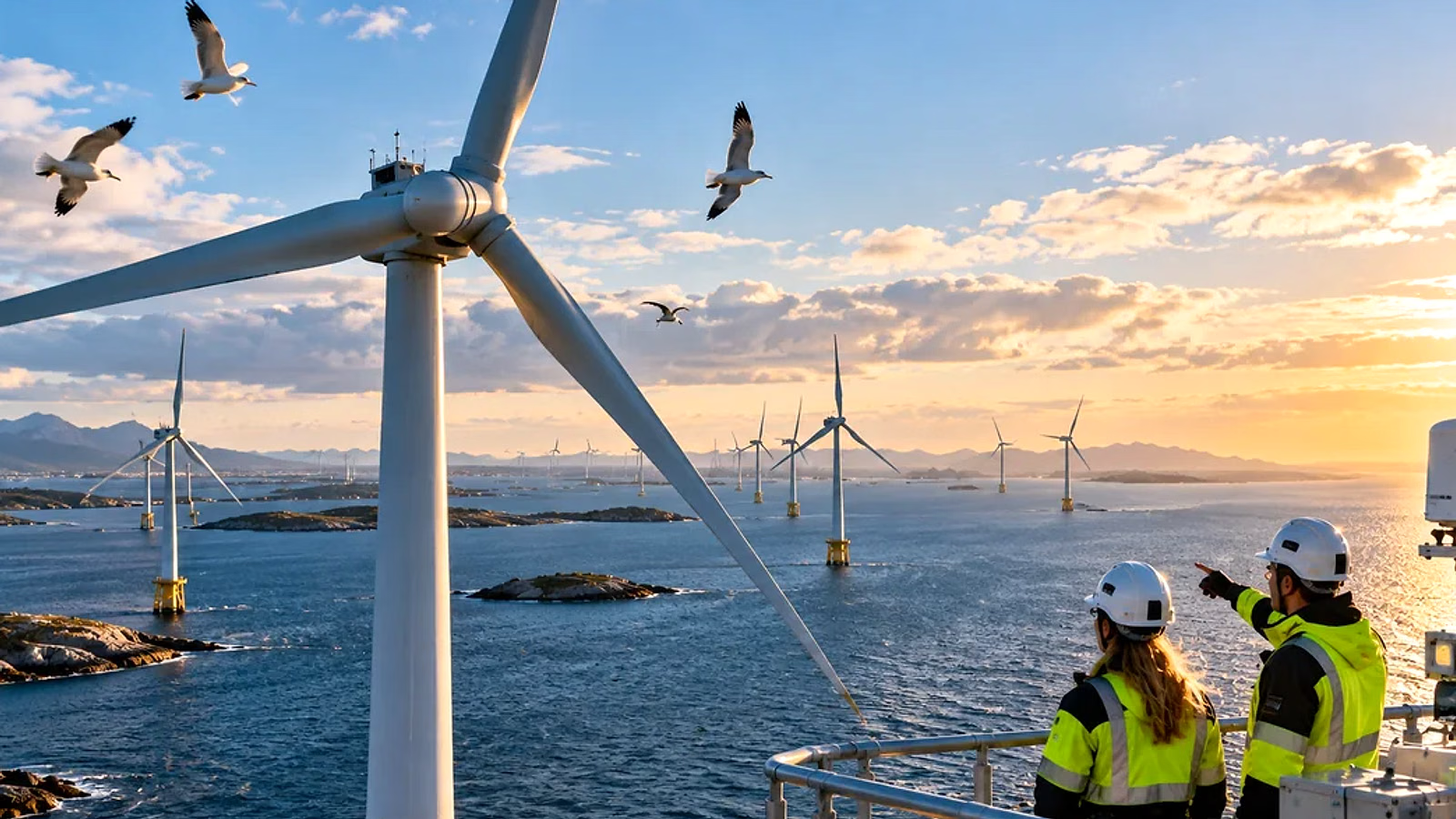
Offshore infrastructure planning has to consider existing uses of the sea, including fisheries, navigation and marine ecosystems. Survey information can help locate cables and foundations, but detailed project assessments are still required. Fishers need clear information about access, potential disruption and the processes for reporting concerns. Environmental outcomes cannot be determined from an announcement that merely funds preparatory measurements. Readers should look for project-specific maps, consultation documents and regulator decisions when they are released, rather than general promotional visuals presented as approved final layouts.
How Wind West relates to other Atlantic projects
The government situates Wind West within a larger Atlantic strategy and refers to the Churchill Falls agreement and interprovincial infrastructure. These developments involve different technologies, provinces, financing arrangements and timelines. Their combined ambition does not mean every figure belongs to Wind West. The $100 million commitment here concerns offshore wind development support, while other hydroelectric or transmission investments must be examined on their own terms. Keeping these projects separate makes it easier to compare expected capacity, actual funding commitments and delivery risks. Similar geographic language should not be used to combine unrelated budgets into one exaggerated announcement.
Frequently asked questions
Has Canada built Wind West turbines already? This announcement funds development preparation; it does not declare a completed offshore farm. Is the entire $100 million a subsidy for household bills? No. What is FLiDAR? It measures wind and sea conditions to support engineering and tenders. When are bids planned? The regulator is expected to launch a call in winter 2027. Is $3 million for new household wiring? The separate nearly $3 million amount supports modelling and surveys for larger transmission routes. Will jobs be available immediately? Vacancies depend on actual projects, procurement and employers, not the ambition in a ministerial speech.
Sources and further reading
Natural Resources Canada, 15 October 2026; Major Projects Office project information. Related practical guide.