
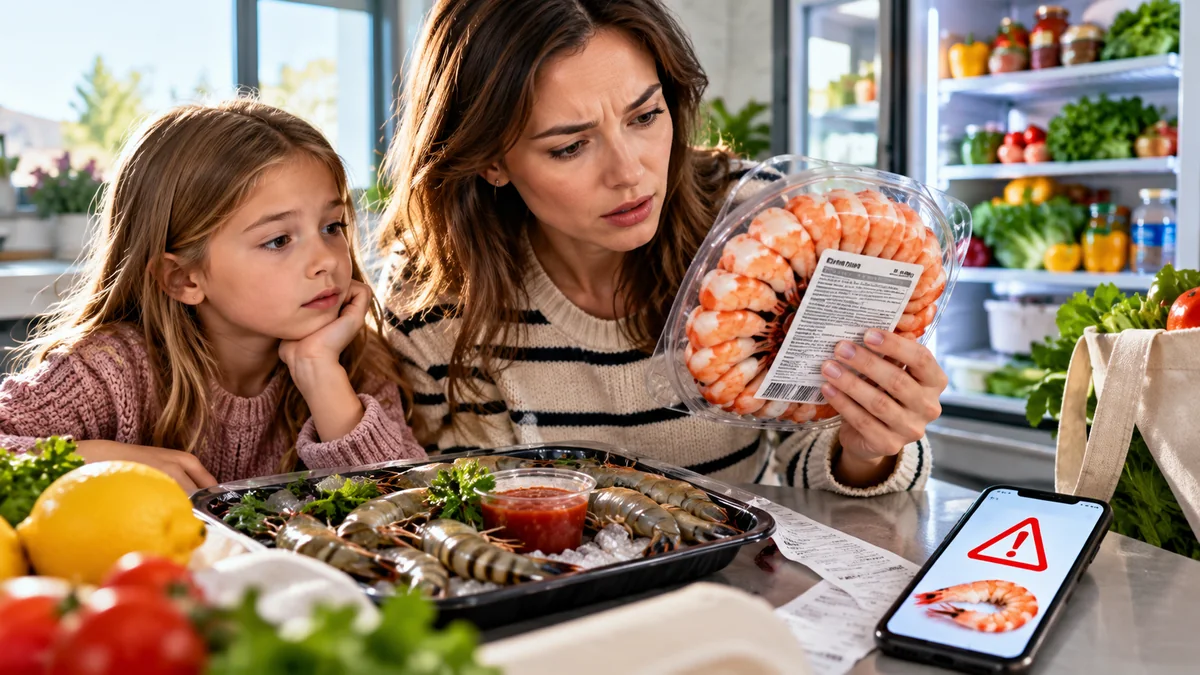
Canadian consumers are being told not to use, sell, serve or distribute selected SeaQuest Shrimp Ring and President’s Choice Black Tiger Shrimp products because they may contain mustard that is not declared on the label. The Canadian Food Inspection Agency updated the national recall notice on 6 October.
The issue is especially important for people with a mustard allergy. A product can look completely normal and still create a serious allergic reaction if the allergen is present but missing from the ingredient or allergen statement.
Which President’s Choice product is affected?
The recall includes President’s Choice Black Tiger Shrimp with Mild Cocktail Sauce in the 568 g size. The UPC listed by the CFIA is 0 60383 18048 5.
The affected best-before dates are 2026 OC 06 and 2026 OC 07. Consumers should compare the brand, product name, package size, UPC and best-before code rather than relying on the appearance of the package alone.
Which SeaQuest product is affected?
The SeaQuest product is Shrimp Ring with Mild Cocktail Sauce in the 454 g size. The listed UPC is 0 60383 18047 8.
The recall includes several best-before codes extending into 2027. Because there are multiple dates, the safest approach is to use the official recall notice when checking a package at home.
Why is undeclared mustard dangerous?
Mustard is a priority food allergen in Canada. For someone with an allergy, even a small amount can trigger symptoms ranging from hives and swelling to breathing difficulty or anaphylaxis.
The risk is not that mustard is unsafe for everyone. The problem is that an allergic consumer may choose the product precisely because the label does not warn that mustard is present.
What should you do if you have the recalled shrimp?
Do not eat the product if it matches the recall information, particularly if anyone in the household has a mustard allergy. Do not serve it to guests, resell it or donate it.
Follow the retailer or manufacturer’s instructions for return or disposal. If you are uncertain whether your package is affected, keep it separate from other food and verify the UPC and best-before code using the official CFIA notice.
What if you already ate it?
If you do not have a mustard allergy and have no symptoms, the recall notice does not mean that everyone who consumed the product will become ill. The alert is specifically related to an undeclared allergen.
If you have a known mustard allergy and develop symptoms after eating the product, follow your allergy emergency plan. Severe symptoms such as difficulty breathing, throat tightness, dizziness or collapse require urgent medical attention.
Why best-before dates matter in this recall
Food recalls often affect only specific production runs. That is why the brand name alone is not enough. Two packages that look identical may have different production codes, with only one included in the recall.
Take a clear photo of the UPC and best-before code before discarding packaging if you may need to contact the retailer or report a reaction.
Is the recall nationwide?
Yes. The CFIA notice lists the distribution as national. That means consumers across Canada should check relevant products rather than assuming the issue is limited to one province.
The recalling company is Loblaw Companies Limited. President’s Choice is widely sold through Loblaw-affiliated stores, which increases the value of checking home freezers even if the product was purchased some time ago.
What does a Class 2 recall mean?
The notice identifies the recall as Class 2. In general, this category is used when the use of or exposure to a product may cause temporary adverse health consequences, or where the probability of serious adverse consequences is remote.
That classification does not mean people with severe allergies should ignore the notice. Allergic reactions can be serious, and consumers should follow the specific instructions in the recall.
How to check your freezer in two minutes
- Look for SeaQuest Shrimp Ring with Mild Cocktail Sauce, 454 g.
- Look for President’s Choice Black Tiger Shrimp with Mild Cocktail Sauce, 568 g.
- Compare the UPC with the official recall notice.
- Compare the best-before code character by character.
- Keep any suspect product separate until you confirm its status.
- Tell other household members not to use the product while you check.
Why food allergen recalls happen
An undeclared allergen can result from a recipe change, a labelling error, the wrong packaging, cross-contact or an ingredient that contains an allergen not carried through correctly to the final label.
Food companies use traceability systems to identify affected batches. That is why recalls often include detailed UPCs, lot codes and dates instead of withdrawing every product under a brand.
How to reduce allergy risk when shopping
People with food allergies should read labels every time, even for products they have bought before. Recipes and suppliers can change. It is also useful to subscribe to government recall alerts rather than relying only on social media posts, which can omit codes or circulate after the notice has been updated.
When ordering prepared food, explain the allergy clearly and ask about sauces and shared preparation areas. Cocktail sauce, marinades and seasoning blends can contain ingredients that are not obvious from the name of the dish.
What retailers should do
Retailers and food-service businesses should identify affected inventory, stop sale or service immediately and follow the distributor’s recall process. Staff should not substitute a visual check for the UPC and date-code verification.
Restaurants or caterers that may have served the products should retain purchase and batch records so they can determine whether affected stock entered their kitchens.
Bottom line
This recall is narrow but important: selected SeaQuest and President’s Choice shrimp products may contain undeclared mustard. Check the exact product, size, UPC and date code. If the package matches, do not use, sell, serve or distribute it.
Source
The official details are published in the Government of Canada recall notice for food recalls and safety alerts. The 6 October notice identifies the products, UPCs, affected codes and national distribution.
More Canadian consumer coverage is available in Life.